
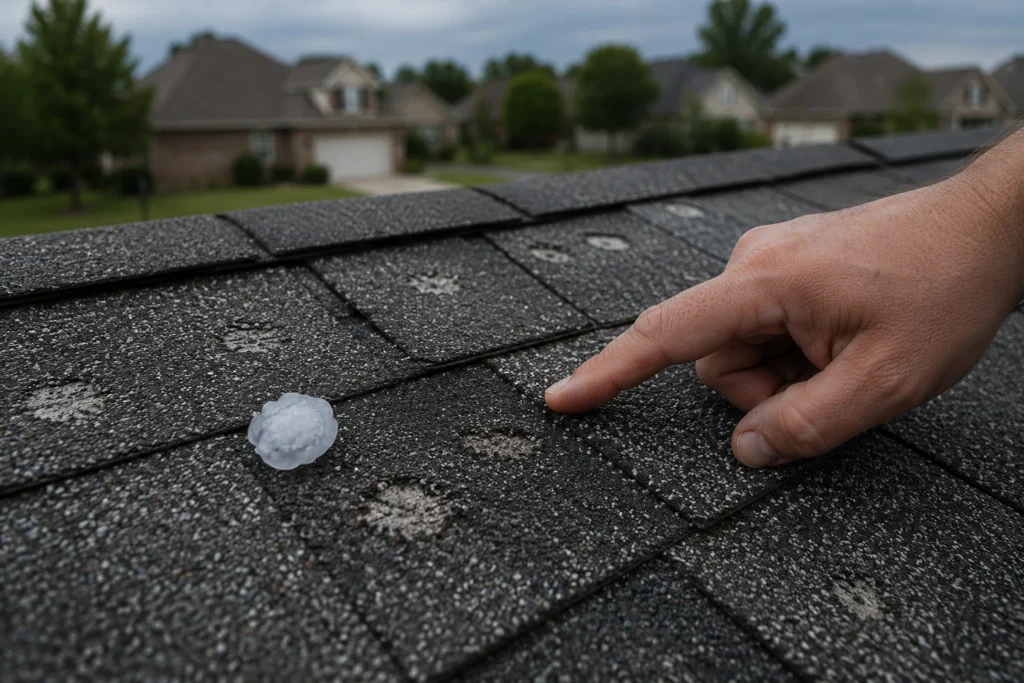
Texas storms do not play around. One afternoon your roof looks perfectly fine. A few minutes later, baseball-sized hail tears through shingles, dents metal panels, cracks tiles, and leaves homeowners scrambling to figure out what comes next. That is exactly why understanding a roof hail damage insurance claim Texas homeowners face after severe weather is so important.
The real problem is not always the hail itself. It is the damage people cannot see immediately. Small fractures. Hidden leaks. Torn underlayment. Softened shingles. Weak flashing. Insurance scope omissions. These issues quietly grow worse over time until a manageable repair turns into a major financial headache. I have seen homeowners wait too long because the roof “looked okay from the ground.” Months later? Water stains appear. Mold develops. Insurance carriers question the timeline. Costs climb fast.
That is why this guide matters. We are going deep into how to identify hail damage by roof type, what steps to take immediately after a storm, how to document your claim properly, what insurance carriers commonly miss, how supplements work, and why a public adjuster can dramatically change the outcome of a claim in Laredo and throughout Texas. If you want the most complete resource on handling a roof hail damage insurance claim Texas homeowners actually face, this is it.
Understanding Hail Damage on Residential Roofs
Hail damage is not always dramatic. Sometimes it is subtle. Dangerous, but subtle. A roof can sustain serious structural compromise even when the exterior still looks mostly intact to an untrained eye. That is where homeowners get trapped.
Why Hail Damage Is More Serious Than It Looks
Hail impacts create more than cosmetic problems. They weaken roofing systems. When hail strikes roofing materials repeatedly, it can:
- Fracture protective surfaces
- Expose underlying materials
- Accelerate aging
- Create future leak points
- Reduce roof lifespan
- Compromise waterproofing systems
Severe hail impacts can also contribute to hidden structural separation inside roofing materials, a process somewhat similar to delamination, where bonded layers begin separating under stress and repeated impact exposure.
And here is the important part. Insurance companies may challenge delayed claims if homeowners wait too long to report damage. That delay creates arguments about wear, maintenance, or unrelated deterioration. Fast action matters.
How Texas Weather Makes Roof Damage Worse
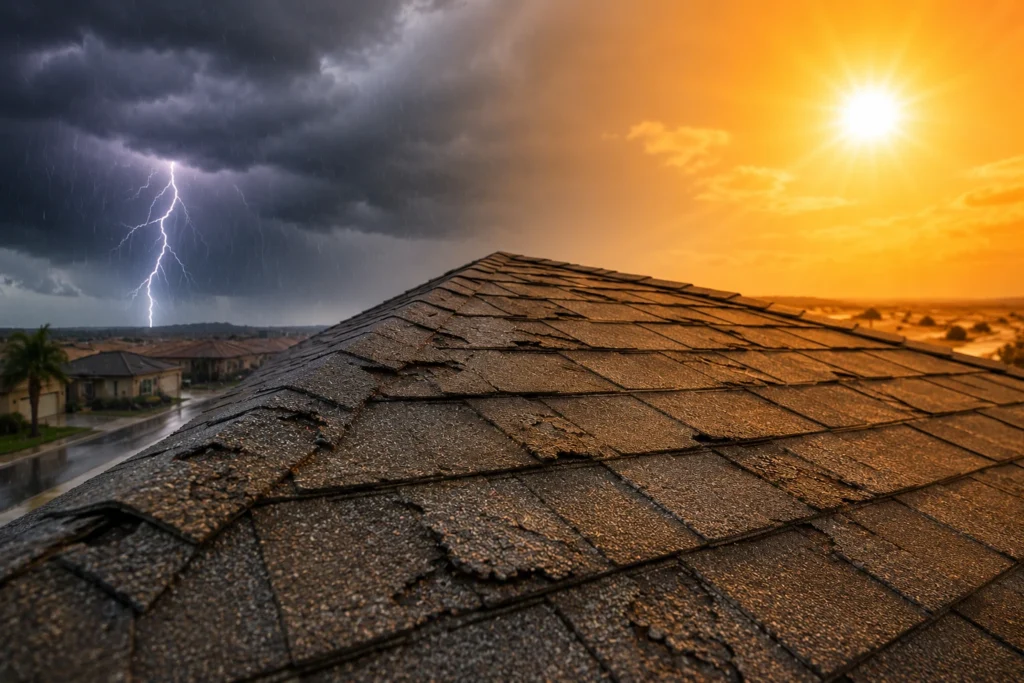
Texas roofs endure brutal conditions year-round. Heat expansion. UV exposure. Wind-driven rain. Sudden temperature shifts. Violent hailstorms. All of that stress weakens roofing materials over time.
Then hail arrives and finishes the job. In areas like Laredo, roofs already experience intense thermal cycling from extreme heat. That means shingles, sealants, flashing, and coatings may already be vulnerable before the storm even begins. This is one reason a roof hail damage insurance claim Texas policyholders submit often becomes more complex than expected.
How to Identify Hail Damage by Roof Type
Not all roofs react the same way to hail. This matters because insurance adjusters evaluate different materials differently. Understanding those distinctions gives homeowners a major advantage during the inspection process.
Asphalt Shingle Roof Hail Damage
Asphalt shingles are the most common residential roofing material in Texas. They are also highly vulnerable to hail impacts.
Signs of Hail Damage on Asphalt Shingles
Look for:
- Circular bruising
- Granule loss
- Black substrate exposure
- Soft spots when touched
- Cracking
- Torn shingle edges
- Random impact patterns
Granule loss is especially important.
Those granules protect shingles from UV exposure. Once stripped away, shingles deteriorate rapidly under Texas heat.
What Functional Damage Looks Like
Insurance carriers typically focus on “functional damage,” not simply appearance. Functional damage may include:
| Damage Type | Why It Matters |
| Bruising | Weakens waterproofing |
| Cracks | Allows water intrusion |
| Exposed matting | Accelerates deterioration |
| Torn tabs | Wind vulnerability |
| Seal strip failure | Increased blow-off risk |
A proper hail damage on roof insurance claim requires detailed documentation of these issues.
Metal Roof Hail Damage
Metal roofs are durable. But they are not indestructible. Many homeowners assume dents are purely cosmetic. Sometimes they are. Sometimes they are not.
Signs of Metal Roof Hail Damage
Watch for:
- Panel dents
- Seam separation
- Fastener loosening
- Coating fractures
- Exposed metal surfaces
Functional damage occurs when impacts compromise seams, fasteners, or protective coatings. That can eventually lead to corrosion and leaks.
Cosmetic vs Functional Damage
This distinction becomes a huge insurance battle. Some policies limit cosmetic damage coverage on metal roofing systems. Others do not. That is why policy review matters so much during a hail roof damage insurance dispute.
Tile Roof Hail Damage
Tile roofs often hide damage better than other materials.
That is dangerous.
Common Tile Roof Problems After Hail
- Cracked tiles
- Hairline fractures
- Broken corners
- Dislodged tiles
- Underlayment damage
The underlayment beneath tile roofing is critical. Even if tiles appear mostly intact, hidden waterproofing damage may already exist underneath. A rushed inspection can easily miss this.
Flat Roof Hail Damage
Commercial and low-slope roofing systems present unique challenges.
Flat Roof Damage Indicators
- Membrane punctures
- Blistering
- Seam separation
- Pooling water
- Coating damage
Flat roof claims often require moisture testing and specialized inspections. Without thorough evaluation, hidden moisture intrusion may continue for months unnoticed.
Areas Insurance Adjusters Commonly Overlook
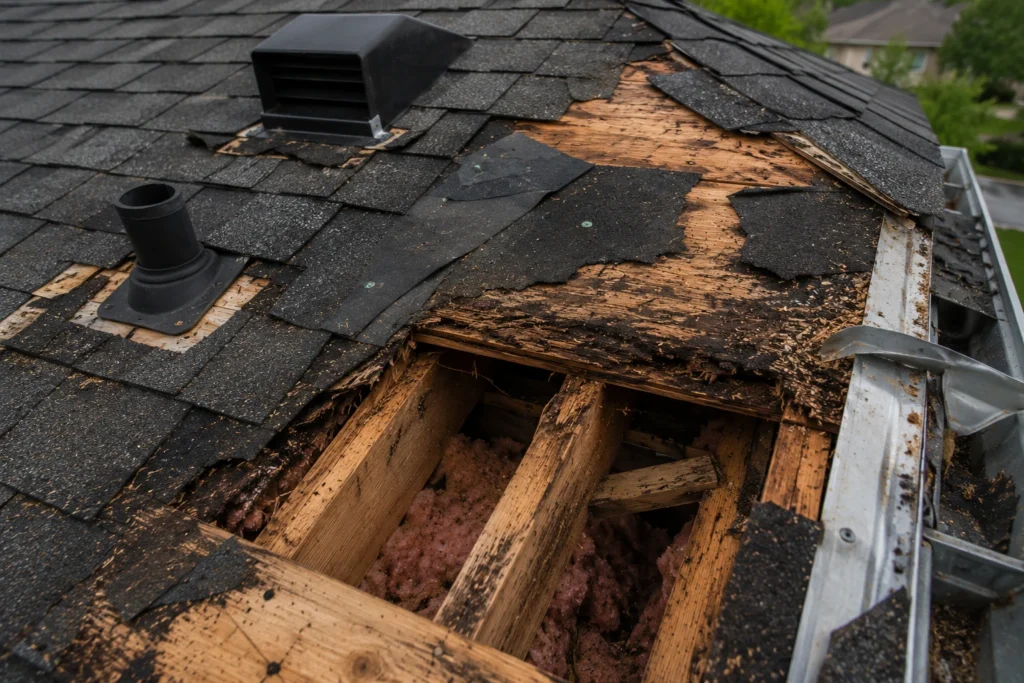
This is where many claims lose money. A carrier inspection may focus heavily on the primary roofing surface while overlooking surrounding components.
Commonly missed items include:
- Ridge caps
- Flashing
- Pipe boots
- Gutters
- Downspouts
- Skylights
- Window screens
- HVAC fins
- Fence staining
- Exterior soft metals
These secondary indicators can actually strengthen a roof hail damage insurance claim Texas homeowners file because they help verify storm intensity and direction.
Immediate Steps to Take After a Hailstorm
The first 48 hours matter enormously. What you do immediately after the storm can either strengthen your claim or weaken it.
Prioritize Safety First
Never climb onto a damaged roof right after a storm. Seriously. Do not risk it.
Wet shingles, unstable decking, and hidden structural issues create major fall hazards.
Instead:
- Stay grounded initially
- Watch for electrical hazards
- Avoid loose debris
- Keep children away from damaged areas
Safety always comes first.
Perform a Ground-Level Inspection
You can still gather valuable information safely from the ground.
Look for:
- Fallen granules
- Dented gutters
- Broken shingles
- Debris impact marks
- Damaged siding
- Bent flashing
Take photos immediately. Time-stamped evidence becomes extremely valuable later.
Prevent Further Damage
Insurance policies generally require homeowners to mitigate additional damage.
That means taking reasonable steps to prevent worsening conditions.
Examples include:
- Emergency tarping
- Water extraction
- Temporary leak protection
- Debris removal
Keep every receipt. Every single one. Those costs may become reimbursable under your policy.
Contact a Roofing Professional Quickly
Not every contractor understands hail claims. That matters. You want someone experienced in storm damage assessments, documentation, and insurance estimating. An experienced inspector can identify damage patterns homeowners often miss completely.
Notify Your Insurance Carrier
Open the claim promptly. Keep communication professional and factual.
Avoid statements like:
- “It’s probably minor.”
- “I think it’s old.”
- “Maybe it was already damaged.”
Stick to facts only. Storm date. Observed conditions. Visible concerns. Nothing more. This helps protect your hail damage on roof insurance claim from unnecessary complications later.
How to Document Damage for Your Insurance Claim
Documentation wins claims. Not emotions. Not frustration. Evidence. The strongest claims are organized, detailed, and supported by clear proof. One of the biggest mistakes homeowners make is assuming a few photos are enough. Understanding How to Document Hail Damage for an Insurance Claim properly can dramatically improve the strength of your case. Detailed close-up photos, wide-angle roof shots, weather reports, contractor notes, and organized timelines all help establish a clearer picture of the storm damage and the resulting repair costs.
Photos Every Homeowner Should Take
Good photos matter more than most people realize. Take both wide-angle and close-up images.
Essential Photo Categories
Roof Surface Photos
- Impact marks
- Missing shingles
- Cracks
- Dents
Exterior Damage
- Gutters
- Siding
- Windows
- HVAC units
Interior Damage
- Ceiling stains
- Wet insulation
- Wall discoloration
- Flooring damage
Collateral Indicators
- Fence impacts
- Broken landscaping
- Detached accessories
Photograph everything before temporary repairs begin whenever possible.
Important Documents to Collect
Strong claims rely on paperwork too.
Create a dedicated storm folder containing:
- Roofing invoices
- Inspection reports
- Maintenance history
- Insurance policy documents
- Weather reports
- Contractor estimates
- Communication records
Organization creates leverage.
Build a Damage Timeline
This is incredibly important for disputed claims.
Your timeline should include:
| Event | Date |
| Hailstorm occurred | Day 1 |
| Initial inspection | Day 2 |
| Insurance notified | Day 3 |
| Adjuster inspection | Day 7 |
| Temporary repairs | Day 8 |
This prevents confusion later.
Use Weather Data to Strengthen Your Claim
Storm verification tools can support your case significantly.
Useful evidence may include:
- NOAA weather reports
- Hail tracking maps
- Local storm alerts
- Radar history
These reports help confirm storm severity and timing during a roof hail damage insurance claim Texas dispute.
Understanding the Roof Insurance Claim Process
Many homeowners feel overwhelmed because they do not understand how claims actually move from start to finish. Let’s simplify it.
Typical Claim Process
- Storm occurs
- Damage inspection performed
- Claim opened
- Insurance inspection scheduled
- Estimate created
- Coverage reviewed
- Settlement issued
- Repairs begin
- Supplements submitted if necessary
Sounds simple. In reality? Problems often appear during estimating and negotiation.
What Insurance Adjusters Look For
Insurance adjusters generally evaluate:
- Functional damage
- Repairability
- Material age
- Storm consistency
- Prior wear
- Policy limitations
The inspection process can move quickly. Too quickly sometimes. That is why homeowners should never assume the first inspection catches everything.
Actual Cash Value vs Replacement Cost Value
This confuses many homeowners.
Actual Cash Value (ACV)
ACV includes depreciation. Older roofs may receive reduced payouts initially.
Replacement Cost Value (RCV)
RCV policies may reimburse full replacement costs after repairs are completed. Understanding your policy structure is critical during a hail roof damage insurance claim.
Understanding Texas Deductibles
Texas policies often contain separate wind and hail deductibles. These are frequently percentage-based.
Example:
| Home Value | 2% Deductible |
| $300,000 | $6,000 |
| $500,000 | $10,000 |
Many homeowners are shocked when they see these numbers. Know your deductible before storm season begins.
What Insurance Carriers Commonly Miss in Their Scope
This section alone can save homeowners thousands. Seriously.
Initial estimates often miss critical components.
Contractors frequently discover additional damage after repair work begins, especially beneath shingles and flashing systems. This is why Hail Damage Claim Supplements: What Carriers Miss in Their Scope becomes such an important part of the negotiation process. Missing ventilation components, underlayment damage, steep roof charges, and code-required upgrades are commonly added during supplements.
Incomplete Roofing Measurements
Incorrect measurements reduce settlements immediately.
Common issues include:
- Underestimated roof squares
- Missing waste calculations
- Incorrect pitch factors
- Incomplete ridge measurements
Small errors add up fast.
Missing Roofing Components
This happens constantly.
Carrier estimates may omit:
- Starter shingles
- Drip edge
- Ridge caps
- Vent flashing
- Ice barriers
- Pipe boots
Those “small items” become major out-of-pocket expenses later.
Ventilation and Accessory Omissions
Ventilation matters more than many people realize. Poor ventilation impacts roof lifespan, attic temperatures, and moisture control.
Missing items may include:
- Ridge vents
- Turbine vents
- Exhaust systems
- Intake ventilation
These omissions commonly appear in a roof hail damage insurance claim Texas estimate review.
Code Upgrade Problems
Building codes evolve constantly. Insurance carriers may overlook required upgrades tied to local codes.
Potentially missed upgrades include:
- Ice barriers
- Flashing requirements
- Ventilation standards
- Deck attachment requirements
This is where ordinance and law coverage becomes extremely important.
Underestimated Labor Costs
Labor pricing fluctuates heavily after major storms. Carrier estimates sometimes fail to reflect:
- Steep roof charges
- Multi-story complexity
- Material handling
- Safety requirements
- Disposal costs
The result?
Contractors cannot complete work properly using the approved amount.
That leads directly into supplements.
The Supplement Process Explained
Supplements are normal. Not suspicious. Not unusual. Normal. Yet many homeowners panic when contractors mention them.
What Is a Supplement?
A supplement is an additional request for payment based on newly identified or previously omitted costs. Supplements commonly arise because:
- Hidden damage appears during repairs
- Initial scopes were incomplete
- Code upgrades apply
- Material pricing changed
Why Initial Estimates Are Rarely Final
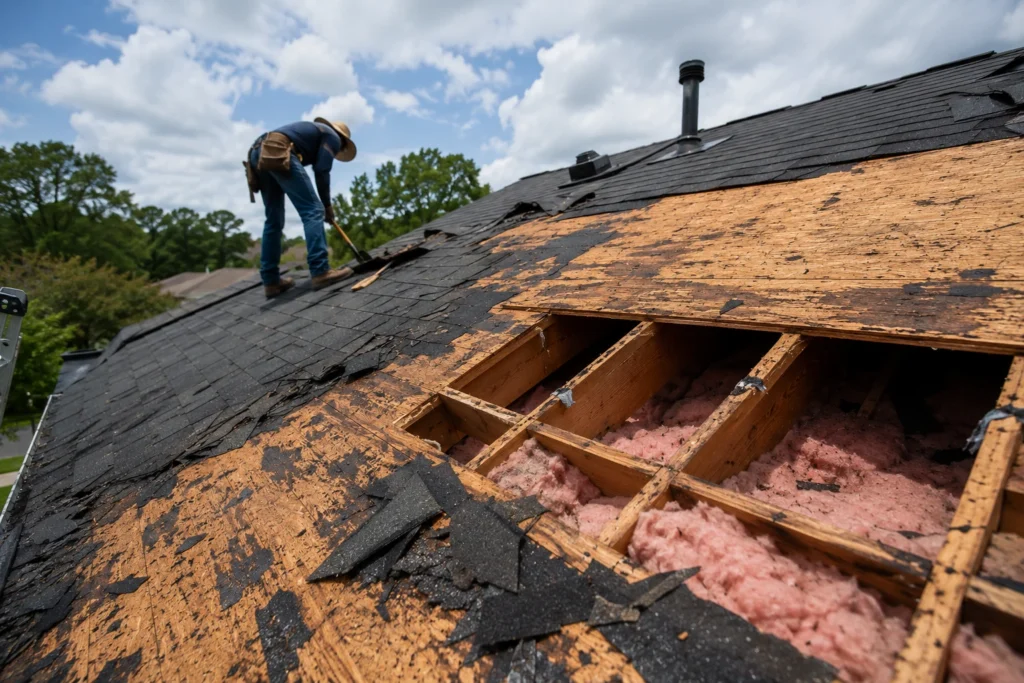
No adjuster sees everything during a short inspection. That is reality. Roof systems are layered and complex. Once tear-off begins, contractors may uncover:
- Rotten decking
- Hidden moisture
- Structural damage
- Ventilation issues
Those costs must be documented and submitted properly.
Common Supplement Items
Typical supplement requests include:
| Supplement Item | Reason |
| Deck replacement | Hidden rot |
| Flashing upgrades | Code compliance |
| Additional labor | Access complexity |
| Ventilation additions | Building requirements |
| Material matching | Discontinued products |
How Supplements Are Submitted
Strong supplements include:
- Detailed photos
- Contractor documentation
- Revised estimates
- Code references
- Supporting measurements
Weak documentation creates delays. Strong documentation creates leverage.
Why Public Adjusters Change the Outcome
This is where claim outcomes often shift dramatically. A public adjuster works for the policyholder. Not the carrier. That difference matters. The difference between representation can significantly affect the final outcome of a claim. When comparing Public Adjuster vs. Insurance Adjuster for Hail Claims in Laredo , TX, homeowners quickly realize that one adjuster works for the insurance company while the other advocates for the policyholder. That difference often impacts documentation quality, estimate accuracy, and supplement negotiations.
Public Adjuster vs Insurance Adjuster
| Feature | Insurance Adjuster | Public Adjuster |
| Represents | Insurance company | Homeowner |
| Goal | Control claim cost | Maximize fair settlement |
| Estimate review | Limited | Detailed |
| Negotiation focus | Carrier interests | Policyholder interests |
How Public Adjusters Strengthen Roof Claims
A skilled public adjuster can help by:
- Reviewing policy language
- Documenting hidden damage
- Challenging incomplete scopes
- Negotiating supplements
- Organizing evidence
- Managing communication
This often becomes critical during disputed hail damage on roof insurance claim situations.
Situations Where Public Adjusters Help Most
Public adjusters are especially valuable when:
- Claims are denied
- Settlements seem low
- Roof systems are complex
- Large losses occur
- Multiple structures are involved
Complex claims require detailed management. Homeowners often panic after receiving a denial letter, but denial does not always mean the process is over. Knowing What to Do If Your Hail Claim Was Denied in Laredo , TX can help you recover important settlement dollars. A second inspection, independent documentation, policy review, and supplemental evidence may uncover damage that was previously overlooked or underestimated during the original inspection.
Why Local Experience Matters in Texas
Texas storms behave differently than storms in many other states. Regional experience matters.
A local public adjuster familiar with Laredo conditions understands:
- Storm patterns
- Roofing materials common to the region
- Local contractor pricing
- Building code expectations
- Carrier trends
That local knowledge can significantly influence a roof hail damage insurance claim Texas outcome.
Common Mistakes Homeowners Make After Hailstorms
Mistakes cost money. Often a lot of it.
Waiting Too Long to File
Delays create suspicion and weaken evidence.
Accepting the First Settlement Too Quickly
Initial offers are not always complete. Review every estimate carefully.
Throwing Away Damaged Materials
Preserve evidence whenever possible.
Hiring Inexperienced Contractors
Cheap repairs can create expensive future problems.
Ignoring Interior Damage
Leaks may not appear immediately after a storm.
How to Protect Your Roof Before the Next Storm
Storm preparation matters. A little prevention now can reduce major losses later.
Schedule Regular Roof Inspections
Annual inspections help identify vulnerabilities early.
Maintain Gutters and Drainage
Water backup accelerates roof deterioration.
Trim Nearby Trees
Falling branches create secondary storm damage.
Upgrade Impact-Resistant Roofing Materials
Some roofing systems perform significantly better during hailstorms.
Review Your Insurance Policy Annually
Know your:
- Deductible
- Coverage type
- Exclusions
- Cosmetic damage limitations
Preparation reduces surprises.
Conclusion
Hail damage claims are rarely simple. The roof may look fine while hidden damage quietly spreads underneath. Insurance estimates may appear complete while critical components are missing. Contractors may uncover additional problems only after repairs begin.
That is why homeowners must approach every roof hail damage insurance claim Texas situation carefully and strategically. Document everything. Act quickly. Review every estimate line by line. Understand the supplement process. And most importantly, never assume the first inspection tells the full story. For homeowners in Laredo, protecting your roof means protecting your investment, your finances, and your peace of mind. The more informed you are before the next storm hits, the stronger your position becomes when it is time to file a claim.
FAQs
Look for bruised shingles, granule loss, dents on gutters, cracked tiles, or water stains inside the home after a storm.
Most policies require prompt reporting, but timelines vary by insurer, so review your policy immediately after a storm.
If the damage is severe enough to affect the roof’s functionality, insurance may approve a full replacement depending on policy terms.
Yes. Small fractures and weakened materials can slowly allow water intrusion over time before visible leaks appear.
Yes. A professional inspection helps identify hidden damage and strengthens your documentation before the insurance adjuster arrives.
Cosmetic damage affects appearance, while functional damage impacts the roof’s ability to protect the home from water intrusion.
Initial scopes may miss flashing, ventilation, labor costs, or hidden structural damage that later appears during repairs.
A supplement is a request for additional payment when contractors discover overlooked or hidden damage after work begins.
Yes. New evidence, detailed inspections, or policy reviews may support reopening or disputing a denied claim.
A public adjuster works for the homeowner, helping document damage, negotiate supplements, and pursue a fair settlement.