

A house fire doesn’t just damage property it disrupts your entire life. One moment everything is normal, and the next you’re standing outside, staring at what used to be your home, wondering what comes next. This is exactly where a fire insurance adjuster becomes essential. Not helpful. Not optional. Essential.
In Laredo, fire claims can get complicated fast. High temperatures, aging wiring, and unique building styles often mean damage goes deeper than what’s visible. I’ve seen homeowners underestimate their losses simply because they didn’t know what to look for. That’s not their fault but it does cost them. This guide breaks it all down clearly and practically. You’ll learn what a fire insurance adjuster does, how claims really work, and how to protect your payout.
What Is a Fire Insurance Adjuster?
A fire insurance adjuster is a professional who evaluates fire damage and determines how much compensation you should receive under your insurance policy. But here’s the key there are different types of adjusters.
Types of Adjusters
- Insurance Company Adjuster
- Works for the insurance company
- Focused on controlling payout amounts
- Independent Adjuster
- Contracted by insurers
- Still represents the insurance company
- Public Fire Insurance Adjuster
- Works for you
- Focuses on maximizing your claim
That difference alone can change the outcome of your claim dramatically.
What Does a Fire Insurance Adjuster Actually Do?
A strong claim doesn’t happen by accident. It’s built.
Core Responsibilities
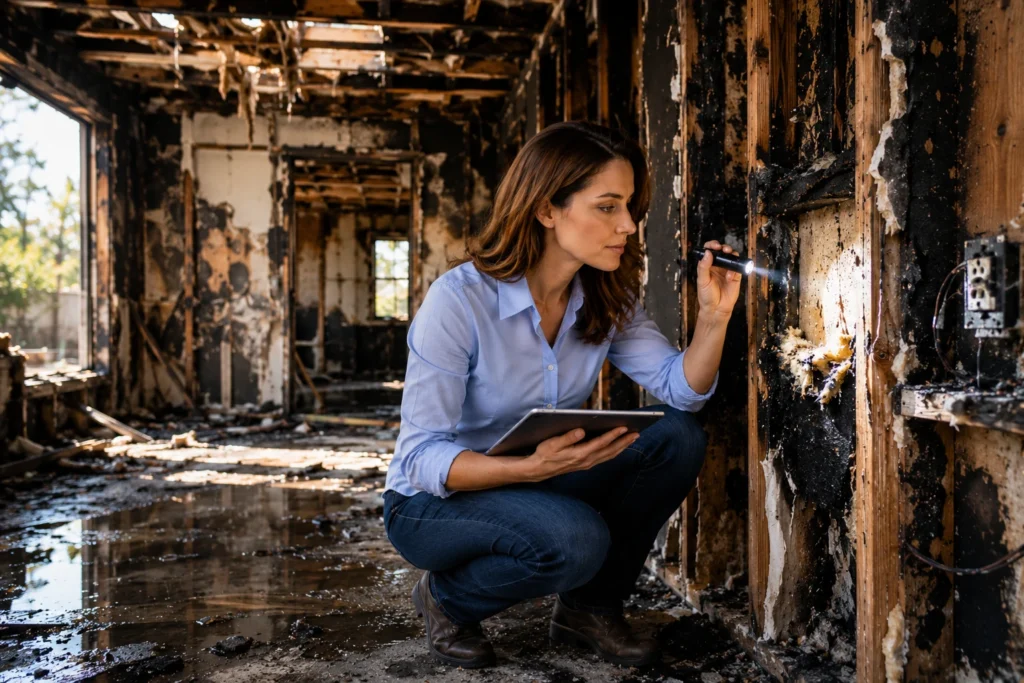
- Inspect visible and hidden damage
- Document losses with precision
- Estimate repair and replacement costs
- Review your policy in detail
- Negotiate directly with the insurance company
I’ve seen claims increase significantly just because damage was documented correctly. That’s the difference between guessing and knowing.
Why Fire Damage Claims Are So Complex
Fire damage goes beyond burned materials. It spreads, lingers, and evolves.
Hidden Challenges
- Smoke infiltrates walls and air systems
- Soot damages surfaces long after the fire
- Water from firefighting creates secondary damage
- Heat weakens structures internally
- Code upgrades increase repair costs
Fire behaves in ways many homeowners don’t fully understand. If you want a deeper scientific explanation of how materials react under heat and oxygen, you can explore Pyrolysis, which helps explain why damage often extends far beyond what’s visible. This complexity is exactly why professional evaluation matters.
Benefits of Hiring a Fire Insurance Adjuster in Laredo
Let’s focus on what you gain.
Key Advantages
- Higher and more accurate claim payouts
- Reduced stress during recovery
- Faster claim resolution
- Strong negotiation support
- Local expertise in Laredo construction costs
Comparison Table
| Scenario | Without Adjuster | With Fire Insurance Adjuster |
| Damage evaluation | Basic | Detailed |
| Claim value | Often lower | Fully maximized |
| Negotiation | Minimal | Strategic |
| Stress | High | Managed |
When Should You Call a Fire Insurance Adjuster?
The earlier, the better.
Best Timing
- Immediately after a fire
- Before filing a claim
- When receiving a low offer
- If your claim is delayed or denied
Signs You Need Help
- You feel overwhelmed
- Your estimate seems inaccurate
- Communication is unclear
- You don’t understand your policy
Trust your instincts. If something feels off, it usually is.
Fire Insurance Adjuster vs Insurance Company Adjuster
| Feature | Insurance Company Adjuster | Public Fire Insurance Adjuster |
| Works for | Insurance company | You |
| Goal | Limit payouts | Maximize claim |
| Advocacy | Limited | Full |
This is not about conflict it’s about alignment.
How the Fire Insurance Claim Process Works
Understanding the process gives you control.
Steps
- Emergency response
- Claim filing
- Initial inspection
- Documentation
- Estimate creation
- Negotiation
- Settlement
The most critical steps? Documentation and negotiation.
Common Mistakes Homeowners Make After a Fire
Avoid these, and you’re already ahead.
- Accepting the first offer
- Missing hidden damage
- Throwing away evidence too soon
- Misreading policy coverage
- Handling everything alone
Rushing costs money. Careful action protects it.
How to Choose the Right Fire Insurance Adjuster in Laredo
What to Look For
- Licensed in Texas
- Fire claim experience
- Local knowledge
- Transparent pricing
- Strong communication
Questions to Ask
- How many fire claims have you handled?
- What is your fee structure?
- How do you maximize claims?
Clarity upfront prevents problems later.
Costs and Fees: What to Expect
Most work on contingency.
- No upfront cost
- Paid as a percentage of your settlement
Typical Range
- 5%–15%
Example
| Scenario | Amount |
| Initial offer | $40,000 |
| Adjusted claim | $85,000 |
Even after fees, the difference is substantial.
Real-Life Scenario
A homeowner receives a $30,000 offer after a fire. It seems fair until a fire insurance adjuster reviews the case.
Revised Claim
- Structural damage: $35,000
- Electrical repairs: $20,000
- Smoke remediation: $18,000
- Contents: $22,000
Final payout: $95,000+
That’s not rare. That’s what proper documentation achieves.
Fire Prevention Tips for Laredo Homeowners

Smart Habits
- Install smoke detectors
- Avoid overloaded outlets
- Keep extinguishers nearby
- Inspect wiring regularly
High-Risk Areas
- Kitchen
- Garage
- Electrical panels
Prevention won’t eliminate risk but it reduces it.
Final Thoughts
A fire insurance adjuster can be the difference between a stressful, underpaid claim and a smooth, fully compensated recovery. If your loss is complex or significant, don’t go through it alone.
Get expert support. Protect your claim. And rebuild with confidence.
FAQs
A fire insurance adjuster evaluates fire damage, documents losses, and helps determine how much compensation you should receive from your insurance claim.
Yes, a public fire insurance adjuster works for you, while an insurance company adjuster represents the insurer’s interests.
You should hire one as early as possible after a fire, especially before filing your claim or if you receive a low settlement offer.
Most work on a contingency fee basis, typically charging 5% to 15% of your final settlement amount.
Yes, they often uncover overlooked damages and negotiate more effectively, which can significantly increase your final settlement.
Not always, but if the damage is complex or the claim feels undervalued, hiring one can still be beneficial.
It can take weeks to several months depending on the extent of damage, documentation, and negotiation process.
Ensure safety first, contact emergency services, document the damage, and notify your insurance company as soon as possible.
Yes, but without expertise, you may miss important details or accept a lower payout than you deserve.
You’ll need photos of the damage, a detailed inventory of losses, repair estimates, and a copy of your insurance policy.